How Do I Choose a Therapist That’s Right for Me?

Written By Amy Bartja, MSW Intern, Choosing Health Counselling
Choosing a therapist is an important and deeply personal decision. Whether you are seeking support for anxiety, trauma, relationship challenges, burnout, or a major life transition, the right therapeutic fit can make all the difference. Here are some key things to consider as you begin your search.
Reflect on your needs and goals
Before beginning your search, take a moment to reflect on why you’re seeking therapy. The trick to getting what you want is knowing what you want!
Are you looking for emotional support, coping skills, or deeper self-understanding?
Do you want support for trauma, relationships, parenting, grief, or anxiety?
Remember, you don’t need perfect clarity on the support you are looking for, but having a general sense of your goals can help guide your search!
Self-Reflection: What is my motivation for seeking therapy? What is painful or not working in my life right now that I could use support with?
Look at Areas of Practice
Therapists can have different educational backgrounds and designations, but what matters most is whether they work with the concerns you’re bringing. Look for therapists who clearly describe experience with your main challenges and who can explain how they support clients with these issues.
Tip: Reading the faqs in our therapists’ bios will give you lots of information about their experience, education, who they work with, the issues they treat, and how they work with clients.
Pay Attention to the Therapy Approach
Have you sought therapy before and it just didn’t feel right? Or maybe this is your first time reaching out for support, and you don’t know what approach might be best for you?
Different therapists use different approaches in supporting their clients. Some may be more structured and skill-based, while others focus on reflection, insight, and emotional processing. Our therapy team at Choosing Health Counselling doesn’t believe in a one-sized fits all approach, and may prefer to integrate multiple approaches if best suited to the client’s needs!
You might ask yourself:
Do I want something practical and goal-oriented?
Do I want space to explore emotions and past experiences?
Do I want a mix of both?
Remember: There is no one “right” approach for your concern, you will learn through this process what feels supportive for you.
2. Try Out a Few Consult Calls!
Our therapists offer free 20 minute consultation calls to get to know you, your needs, and their professional opinion on what could help you. Sometimes that means they will refer you to another team member or professional!
Consult Calls are your opportunity to decide whether the therapist feels like the right fit for you but you may still not be sure even after the call! We recommend scheduling calls with more than one therapist on our team. It’s a great way to really get a sense of who you click with.
Consult calls may feel a little daunting (especially if you ‘re new to therapy)…Please note: They’re meant to be low-pressure and conversational. You’re not expected to share intimate details of your life or have the “perfect” explanation for why you are reaching out.
Here’s what you can generally expect:
Introductions: The therapist will briefly share their approach, areas of practice, and what working together might look like.
Your Concerns: You may be invited to share what is bringing you to therapy right now and can share your concerns at whatever level feels comfortable for you.
Logistics: This is usually where session length, fees, availability, and next steps are discussed.
Fit Check: Both you and the therapist are assessing whether this feels like a good match.
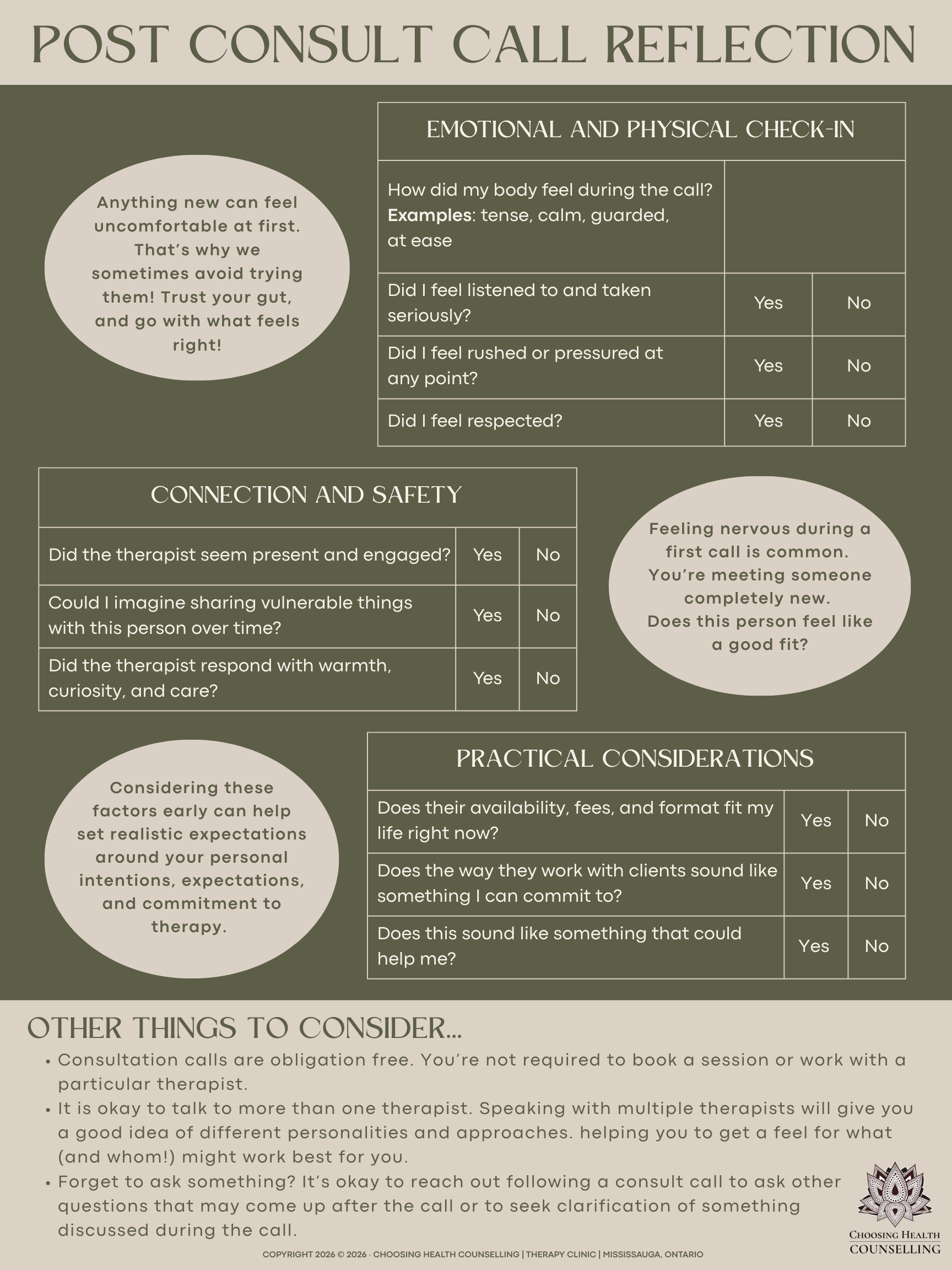
RESOURCE ALERT! Check out our consult call checklist template for questions to ask the therapist during the consult call, and questions to ask yourself after.
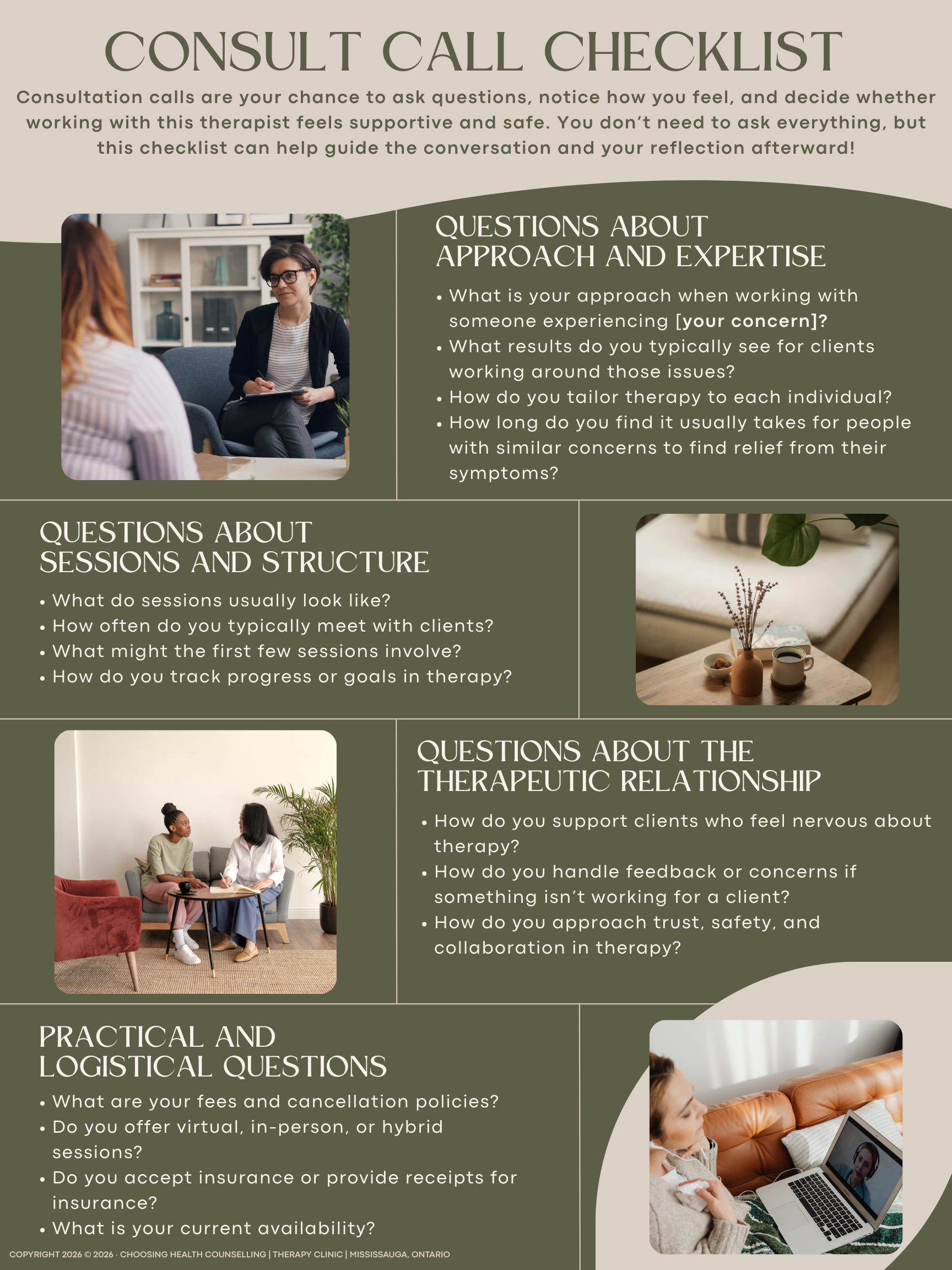
Remember, it’s okay to book more than one consult call. You are allowed to take your time. Reaching out is a big step and it’s important to do so at a pace that feels comfortable for you, so take the time to compare options and choose the therapist who feels like the best fit for you. This step is about empowering yourself in the process because therapy works best when you feel comfortable, safe, and supported from the start.
3. The Relationship Matters Most
Research has consistently shown that the therapeutic relationship is one of the strongest predictors of positive outcomes in therapy. Feeling heard, respected, and emotionally safe is essential.
After the consult call, consider:
Did I feel comfortable being honest?
Did I feel understood and not judged?
Did the therapist feel present and engaged?
Did I get a good feeling about working with this person?
Tip: Continue to ask yourself these questions after completing your first few sessions. It is okay to change therapists if they’re not meeting your expectations!
4. Consider Identity and Values
Some people may prefer a therapist who shares or deeply understands aspects of their identity, culture, or life experiences. Others value a therapist who is explicitly trauma-informed, anti-oppressive, or culturally responsive.
It’s appropriate to look for therapists whose values align with yours and to ask questions about this during consultation calls!
5. Practical Factors Matter Too!
Therapy needs to be sustainable for you. Things to consider:
Cost and insurance coverage
Session length and frequency
In-person vs. virtual options
Availability that fits your schedule
Considering these factors early on can help remove barriers that may arise in ongoing therapy, allowing you to focus on what matters most… YOU!
Therapy is most successful with consistent attendance because regular sessions build momentum, strengthen the therapeutic relationship, and allow for the consistent application and reinforcement of new coping skills. Research consistently links better attendance to improved treatment outcomes.
6. It’s Okay to Change Therapists
Once you choose a therapist who feels like a good fit, it can be helpful to schedule 4-6 initial sessions. The first few appointments are often intake sessions, where your therapist is getting to know you, your history, your concerns, and what has brought you to therapy.
After two to three sessions, you may have a clearer sense of whether the connection feels right. If you find it doesn’t, you haven’t failed and neither has the therapist. Finding the right therapeutic fit can take time, and it’s completely okay to reach out and try another therapist if your needs change or the connection doesn’t feel supportive.
Choosing to explore a different fit isn’t giving up, it's advocating for yourself and your well-being.
Final Thoughts
Choosing a therapist is about finding someone who can walk alongside you with care, skill, and respect. You deserve support that feels safe, validating, and aligned with your goals. Take your time, ask questions, and remember that you are allowed to prioritize your comfort and wellbeing.